 Fall Back Sleep
5 sleep tips for the week after fall back
Fall back is supposed to be the easy one. You gain an hour! And yet, by the Wednesday after the change, plenty of people feel oddly tired at 9:00 p.m., wake up before their alarm, and can't quite say why. The reason is simple: your body clock doesn't read the numbers on the stove. It reads light, routine, and habit — and all three just shifted by an hour. These five tips are how you shift them back, deliberately, over the week after Sunday, November 1. (If you're in BC, Alberta, Manitoba, the NWT, Saskatchewan, or Yukon, your clocks didn't change this year — lucky you; send this to a friend out east.)
1. Get bright light soon after you wake up
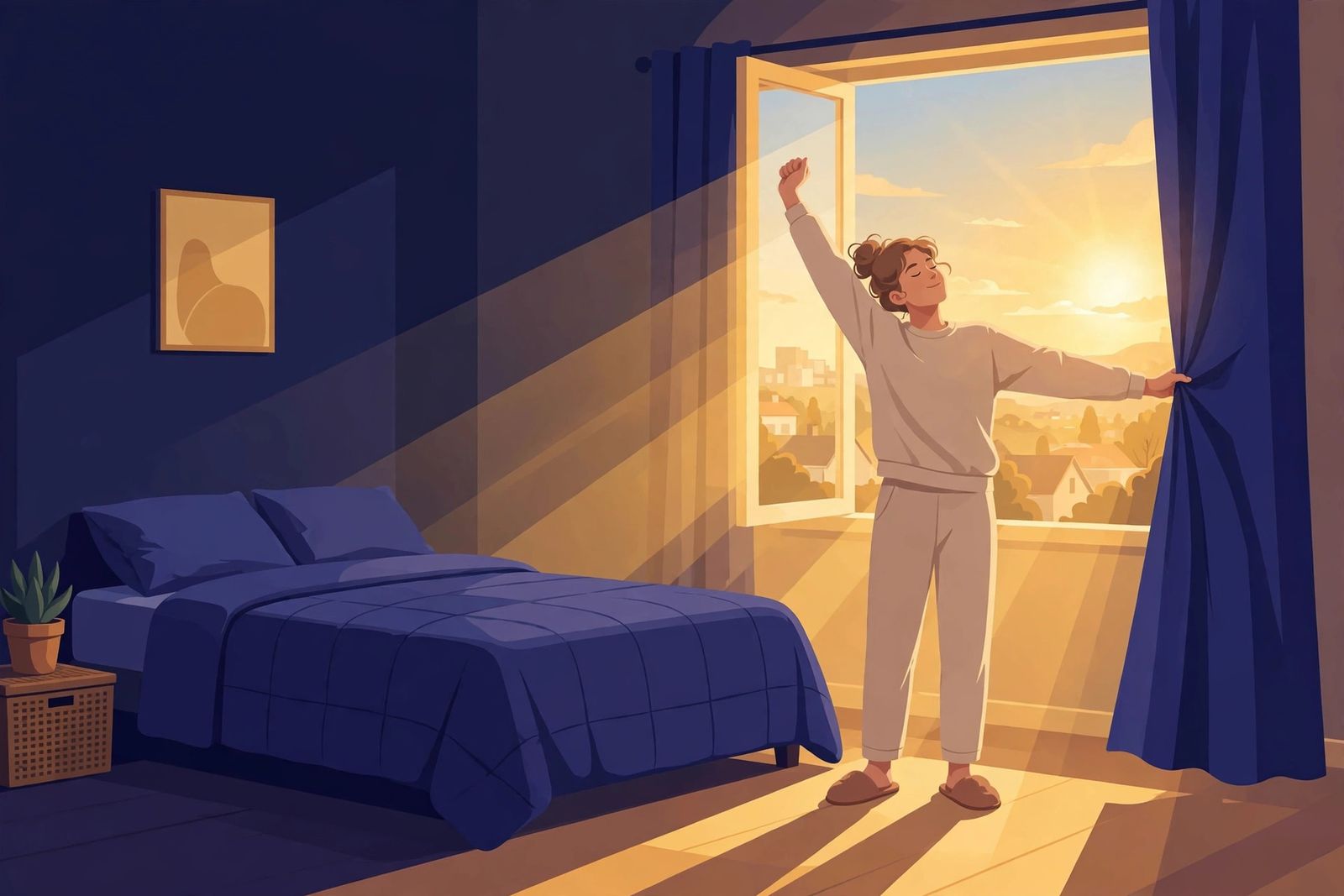
This is the single highest-value move, because light is the strongest signal your body clock takes. After fall back, mornings are brighter earlier — the sun that rises during your commute in October now rises before it. Use that. Open the curtains as soon as you get up, eat breakfast near a window, and if you can, get outside for even ten or fifteen minutes in the first part of the morning: a walk, the school run on foot, coffee on the step. Cloudy counts — outdoor light on a grey November morning is still far brighter than indoor lighting. What you're doing is telling your body, unambiguously, "this is morning now," and it will set the rest of the day — including when you get sleepy tonight — from that anchor.
2. Keep your wake-up time fixed — including the first morning
The "extra hour" invites a lie-in, and one lie-in invites another. If you sleep an extra hour on Sunday, then another on Monday because you're still on the old schedule, your body never quite lands on the new one. Instead, get up at your usual clock time from Sunday onward — yes, even though your body thinks it's an hour later and would happily keep sleeping. A fixed wake time does more to re-set a body clock than a fixed bedtime does, because tiredness then arrives on schedule in the evening. If Sunday-you wakes at 5:00 fully rested anyway (it happens), don't fight it: get up, get light, and enjoy the quiet hour. Just don't drift the anchor for the rest of the week.
3. Move your evenings earlier, gently
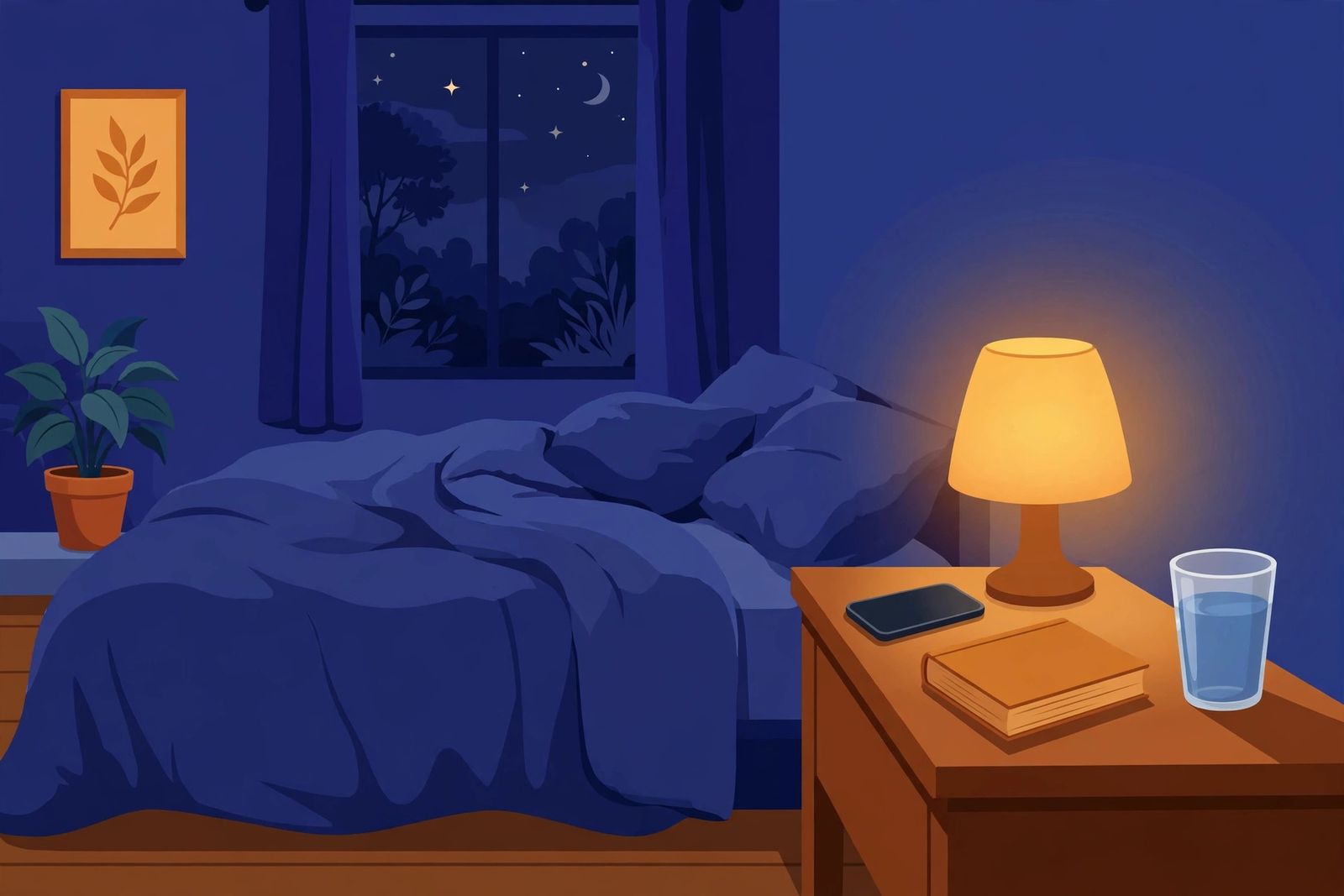
For the first few evenings after the change, your sleepiness will arrive about an hour "early" by the clock — 9:00 p.m. feeling like 10:00. Don't override it with bright light and activity and then wonder why you're wired at bedtime. Work with it: dim the house lights in the last hour, take screens down a notch (or off), and let the evening routine — dinner, dishes, bath, book — happen in its usual order at the new clock times. If you're genuinely sleepy at 9:30, go to bed at 9:30 for a night or two; your wake time anchor in tip 2 keeps the whole system honest, and the evening tiredness will drift later across the week on its own.
4. Shift meals, exercise, and caffeine with the clock
Your body clock takes cues from more than light. Eating, moving, and caffeine all nudge it — which means a week of "everything an hour off" is partly a scheduling problem, not just a sleep problem. From Sunday onward, eat meals at the new clock times even if your hunger is running an hour behind (it will catch up in a day or two). Exercise helps you sleep, and morning or afternoon exercise at the new times reinforces the shift; a hard workout in the last couple of hours before bed can do the opposite for some people. And mind the caffeine math: a coffee at your body's "usual" afternoon time may now sit closer to bedtime than you think. If sleep is ragged this week, moving your last coffee earlier is one of the cheapest experiments you can run.
5. Nap short and early — or not at all
If the week catches up with you, a nap is fine — but make it work for you instead of against you. Keep it to about 20–30 minutes, and take it in the early afternoon, at the new clock time. A long, late nap borrows sleep from the coming night and delays the very adjustment you're trying to finish. If you're not truly sleepy, a rest with your eyes closed in a dim room still helps without the groggy wake-up. Parents: this applies to you double if your kids are still on the old schedule and waking you at 5:00 — the kids' shift plan fixes the root cause for next time; for this week, the early nap is self-defence.
A word for shift workers
If you work overnights, fall back weekend has a specific wrinkle: the 1:00–2:00 a.m. hour happens twice on November 1, which can mean an extra hour on shift that night. How that hour is scheduled and paid is an employer-and-employment-standards question, and practices vary — check with your employer before the weekend rather than discovering the answer at 1:45 a.m., twice. For sleep itself, the tips above still apply, with the anchor moved: keep your main sleep block at a consistent clock time across the change, and use light deliberately — bright light during your shift, sunglasses on the morning drive home if you're sleeping into the day.
⚠ Drowsy driving is the real risk this week. A body clock that's an hour off makes for genuinely impaired alertness, especially on dark evening commutes — and after fall back, the drive home happens in the dark. If you're drowsy behind the wheel, that's a pull-over problem, not a push-through one: get off the road, take a break, swap drivers. No meeting is worth it.
One more: don't let the evening drink do the deciding
It deserves its own paragraph because it's so common this week: a glass of wine or a nightcap to help you drop off at the "wrong"-feeling hour. Alcohol does make many people fall asleep faster — and then fragments the second half of the night, which is precisely the half your adjusting body clock is trying to protect. During adjustment week, you'll usually do better with the boring package: dim lights, a warm shower, a book, and a consistent lights-out. Save the nightcap for when the week is normal again and it costs you nothing.
Give it a week — and know what's not normal
For most people, the adjustment is done within a few days; a week is the outer edge for a one-hour change. You should feel the early wake-ups soften and the 9:00 p.m. sleepiness drift back to your normal bedtime across the week. What a clock change does not explain: loud snoring or gasping, insomnia that persists for weeks, falling asleep involuntarily during the day, or exhaustion that doesn't lift with regular sleep. Those are worth a real conversation with a doctor — a one-hour time change is a nudge to a healthy system, and if your system is struggling with more than the nudge, it's not the calendar's fault and it deserves proper attention.
The comforting truth about fall back: unlike spring forward, nothing is being taken from you. The hour is a gift — the trick is just spending the week teaching your body what time the gift arrived.