 Fall Back Sleep
Fall back checklist: clocks, smoke detectors, car clocks
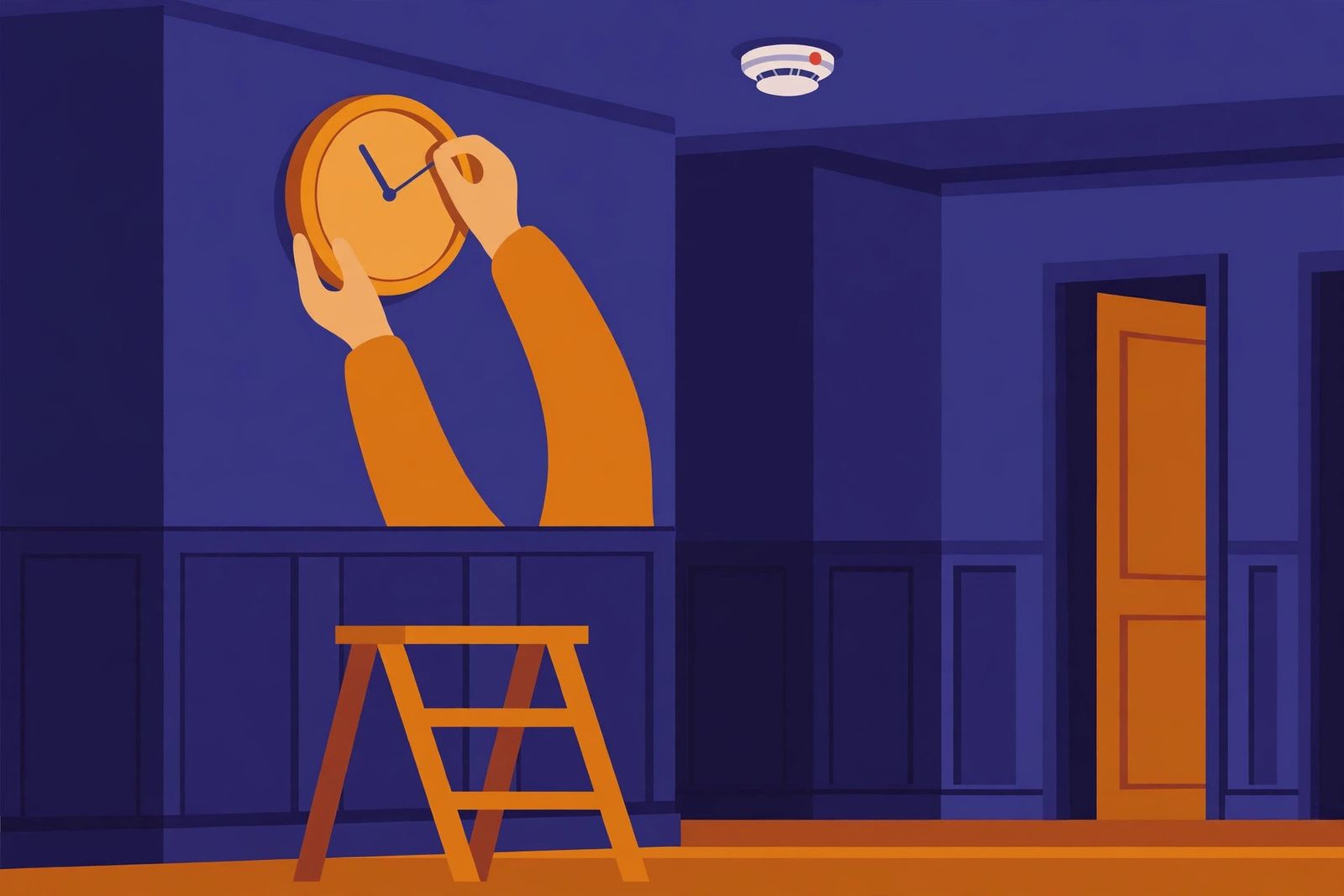
The clock change itself takes ten minutes. The reason fall back weekend deserves a checklist is everything attached to the clocks: the stove that will otherwise flash the wrong time until spring, the car dashboard you'll misread on Monday morning, the thermostat schedule quietly running an hour off — and the one genuinely important job that has ridden along with the clock change for decades, testing your smoke and carbon monoxide alarms. Do it all in one pass through the house, coffee in hand, on Saturday, October 31 or Sunday, November 1. (BC, Alberta, Manitoba, NWT, Saskatchewan, and Yukon readers: your clocks don't change this year — skip to the alarm check, which still applies to you, twice a year as ever.)
Step 1: The clocks (Saturday night or Sunday morning)
Set manual clocks back one hour. The full sweep, in the order people forget them:
- Wall clocks and mantel clocks — the ones you actually read.
- Stove and microwave clocks — the ones you'll otherwise read instead of the right one.
- The coffee maker's timer, if you use the auto-brew. Monday morning you will thank Saturday you.
- Bedside alarm clocks that aren't phones.
- Wristwatches you don't wear daily (the drawer watch is wrong twice a year, guaranteed).
- The car — see step 3.
- Any clock in a basement, garage, or guest room. Future you, hosting guests, says thanks.
Phones, computers, tablets, and smart TVs should update themselves overnight. Check one on Sunday morning anyway: if your phone shows a different time than your (corrected) wall clock, the phone is the suspicious one — restart it and check its date-and-time settings are set to automatic.
Step 2: Smoke and CO alarms — the important part
Fire services across Canada have tied alarm checks to the clock change for years, for a simple reason: it's a date you can't forget, twice a year. While you're walking the house anyway:
- Press the test button on every smoke alarm and carbon monoxide alarm until it sounds. A silent alarm is not a working alarm — replace the unit or its batteries now, not "soon."
- If your alarms take replaceable batteries, this is the change-them date — fresh batteries at fall back (and a test at spring forward) is the classic routine. If an alarm chirps at 3 a.m. in February anyway, that's it asking again; don't just take the battery out.
- Check the date on each alarm. Smoke and CO alarms wear out: manufacturers direct replacement of smoke alarms 10 years after the manufacture date (printed on the back or side of the unit), and CO alarms have their own stated service life. An alarm past its date can look fine and fail silently — replace it.
- Count your coverage. Working smoke alarms belong on every storey of the home and near sleeping areas; CO alarms near bedrooms if you have fuel-burning appliances, a fireplace, or an attached garage. If you're short, that's this week's hardware-store run.
⚠ Follow the manufacturer and your local fire department first. This checklist is a memory aid, not a code book: alarm placement and replacement rules vary by province and municipality, and the instructions printed with your alarms override anything here. When in doubt, your fire department's website has the local rules — and many will answer a phone call about alarm placement for free.
Step 3: The car (before Monday's commute)
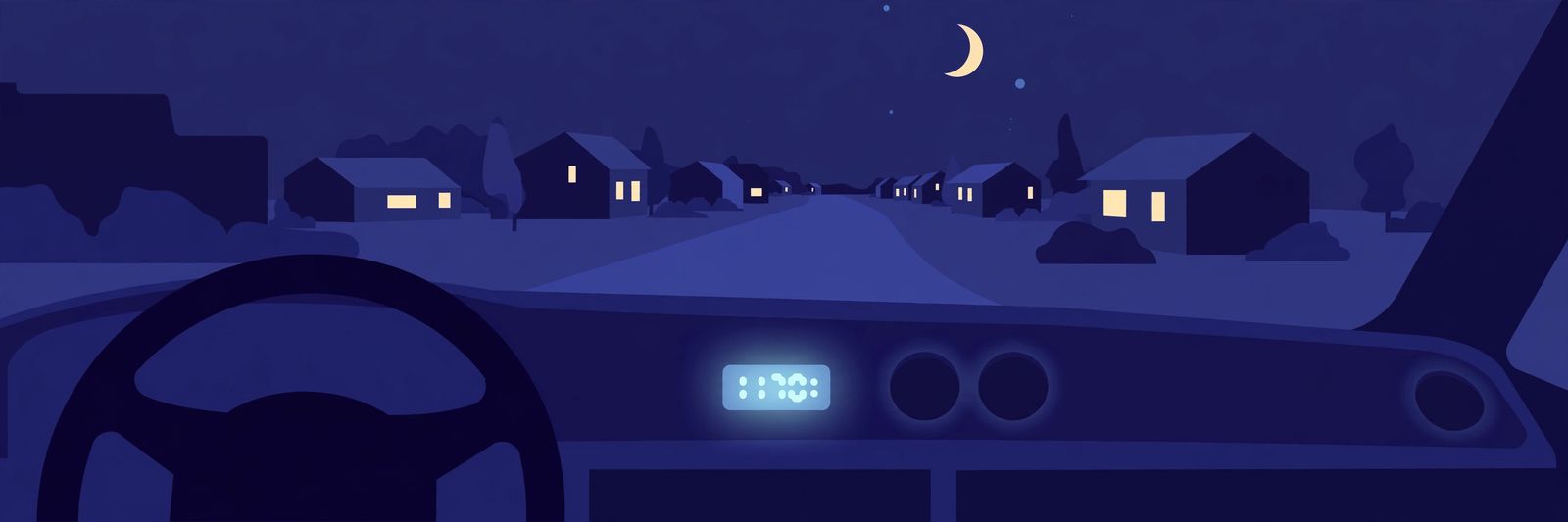
- Dashboard clock back one hour — every car hides this setting in a different menu. Some cars with GPS or connected services update themselves; many don't. Do it while parked, not at a red light on Monday.
- Dashcam and GPS timestamps — check that recordings show the right time; if your dashcam has a daylight-saving toggle, it may now need the opposite setting.
- Winter readiness while you're in there: November 1 is a fine annual trigger to move the ice scraper and brush to the front seat, check washer fluid, and confirm your winter tires are booked or on. In Quebec, winter tires are legally required from December 1; the appointment rush is real.
Step 4: Timers, schedules, and the quietly-wrong devices
- Programmable thermostat: if it doesn't auto-adjust, its schedule is now an hour off — your morning warm-up fires at the wrong time until you fix the clock.
- Outdoor light timers and smart plugs: sunset arrives an hour earlier by the clock from Sunday on. Timers set to fixed times may need an hour's nudge so the porch light meets you at the door.
- Security cameras and video doorbells: confirm the timestamp on recordings is right after the change; an hour-off timestamp matters if you ever need the footage.
- Medical and care devices: anything that doses, reminds, or logs by the clock deserves a deliberate check against its instructions — don't guess with these; if the manual is unclear, the manufacturer's support line is the authority.
- Pet feeders and aquarium/garden timers: automated feeders with manual clocks will feed an hour late (by the new time) until reset. Your dog has opinions about this.
Step 4½: Heat, light, and the earlier darkness
- Furnace filter and heating schedule: you have the thermostat open anyway — check the furnace filter while you're there. A clogged filter heading into heating season makes the furnace work harder for the same warmth, and fall back weekend is as good a replacement reminder as any date on the calendar.
- Flashlights and spare batteries: from Sunday, it's dark before dinner. Put a working flashlight where you'd reach for it in a blackout, check the batteries in the ones you have, and keep spares with the smoke-alarm batteries so next year's check finds them.
- Porch and path lighting: trick-or-treaters arrive Saturday night and commuters arrive home in the dark from Monday — a dead porch bulb is a five-minute fix that matters more this week than any other.
Step 5: The 2026 special — devices in the no-change provinces
This year's twist: in BC, Alberta, Manitoba, and the Northwest Territories, the correct action is to change nothing — but some devices don't know that yet. Time rules live in software, and older phones, computers, and embedded devices may still try to fall back on November 1 using last year's rules. The Northwest Territories government specifically warned that older devices and some Windows computers will need a manual update. So on Sunday morning in a no-change province: compare your devices against a known-good source. If one fell back on its own, update its software; if there's no update, set its time zone manually to a fixed offset (your province's year-round UTC offset — see the province guide) rather than just correcting the hour, or it will "fix" itself again later.
Step 6: People and pets
- Kids: if you ran the four-day bedtime shift, Sunday is a normal day. If you didn't, split the difference for a few days and accept the early mornings.
- Pets: animals keep body-clock time, not clock time. Shift feeding and walks by 15–20 minutes a day over a few days, or brace for a 5 a.m. audit of your life choices by a cat standing on your chest.
- Monday: leave five extra minutes. Every year, some part of this list gets missed — the goal is that it's the coffee maker, not the alarm clock.
That's the whole sweep: clocks back, alarms tested, car sorted, timers nudged, and one less thing to think about until March — for those of you whose provinces still spring forward, anyway.