 Fall Back Sleep
Fall back 2026: when the clocks change in Canada (and where they don't)
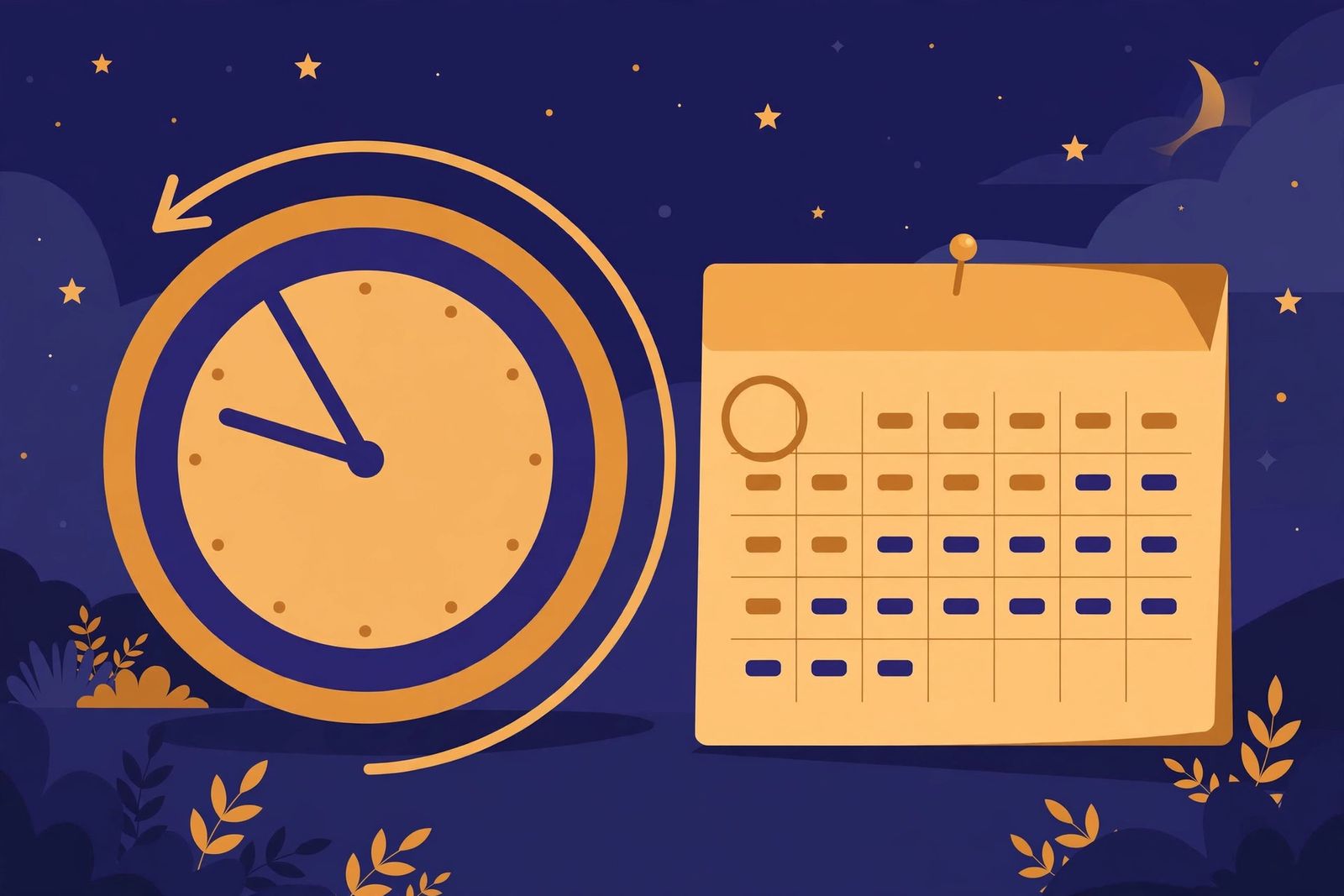
The short answer: in the parts of Canada that still observe daylight saving time, it ends on Sunday, November 1, 2026, at 2:00 a.m. At that moment, clocks move back one hour to 1:00 a.m. local standard time, sunrise and sunset both arrive an hour earlier by the clock, and the day gets an extra hour — 25 hours in total. If you live in most of Ontario, Quebec, Atlantic Canada, or Nunavut, this is your fall back. If you live in British Columbia, Alberta, Manitoba, the Northwest Territories, Saskatchewan, or Yukon, keep reading: this year, your clocks stay exactly where they are.
Why 2:00 a.m.?
The 2:00 a.m. changeover is a long-standing convention across North America. It's late enough that most people are home and asleep, early enough that overnight shift workers and early trains are minimally disrupted, and it avoids the confusion of a clock change at midnight, which would make the date itself ambiguous. In practice, almost nobody watches it happen: phones, computers, and most connected devices adjust on their own. The clocks you actually have to think about are the manual ones — the wall clock, the stove, the microwave, the car — and we have a full fall back checklist for those.
The repeated hour, explained
When clocks fall back, the hour from 1:00 to 2:00 a.m. happens twice. Your phone handles this silently, but it's why the change is set for the small hours: very few appointments, flights, or shifts land in a doubled hour on a Sunday morning. If you're awake for it — a night-shift worker, a parent of a newborn — the practical effect is simple: the night is one hour longer, and 1:30 a.m. is a time that exists two times in a row.
A very short history of falling back
Canadians have been doing this for over a century. Daylight saving time was first formally adopted across Canada during the First World War, to stretch evening light for factories and save fuel, and it returned nationwide during the Second World War. After the wars, the decision devolved to the provinces and territories — which is why time observance is a provincial power today, and why the map could fracture the way it has in 2026. For most of the modern era the provinces moved in lockstep with the United States, including the 2005 change that stretched the daylight season into March and November. This year is the first real break in that lockstep — and it happened province by province, vote by vote.
Who falls back on November 1, 2026
Time observance in Canada is a provincial and territorial decision, which is how we ended up with this year's patchwork. On November 1, 2026, clocks go back one hour in:
- Most of Ontario — including Toronto, Ottawa, and the south. (One exception, covered below: the northwest.)
- Most of Quebec — including Montreal and Quebec City.
- Atlantic Canada — New Brunswick, Nova Scotia, Prince Edward Island, and Newfoundland and Labrador.
- Most of Nunavut.
For these regions, November 1 is a completely normal fall back: set manual clocks back before bed on Saturday, October 31, enjoy the longer night, and expect earlier sunsets from Sunday onward.
Who does not change clocks this year
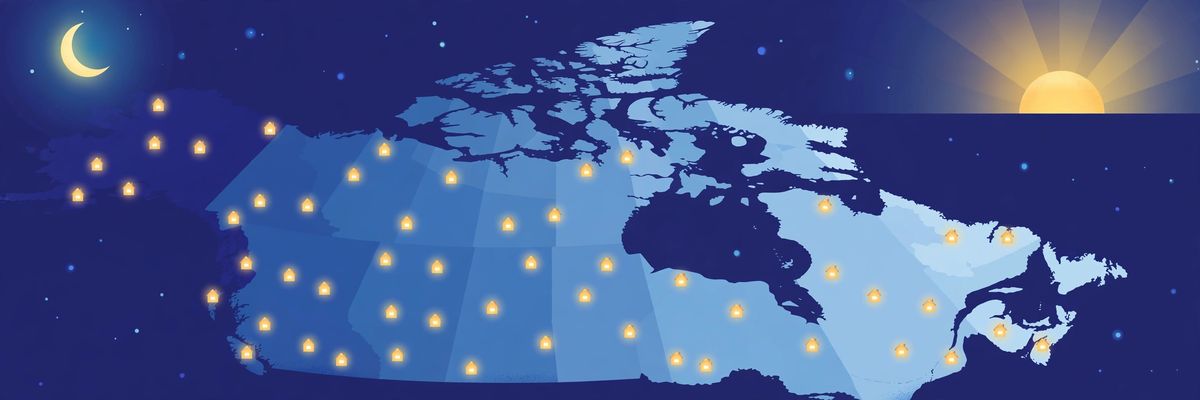
This is the new part. Four jurisdictions ended seasonal clock changes in 2026, joining two that had already stopped:
- British Columbia moved to permanent daylight time — officially "Pacific time" (PCT), UTC−7 — after its final clock change on March 8, 2026. On November 1, BC clocks simply stay put.
- Alberta adopted permanent "Alberta Time" (UTC−6, the offset it used to call Mountain Daylight Time), effective November 1, 2026 — no fall back.
- Manitoba announced in September 2026 that it will stay on daylight time permanently (UTC−5 year-round), after a public vote in which roughly 72,000 Manitobans took part. Its clocks do not go back on November 1.
- The Northwest Territories established "Northwest Territories Time" (UTC−6) year-round; its regulations came into force in August 2026, and no November change will occur.
- Saskatchewan has stayed on Central Standard Time year-round since 1966 (the border city of Lloydminster follows Alberta's time instead).
- Yukon has kept a single year-round time since 2020.
There are also two smaller wrinkles worth knowing. In Ontario, communities in the northwest, west of the 90th meridian — Kenora, Atikokan, and their neighbours — will stay aligned with Manitoba this year instead of falling back with the rest of the province. And a few places have always had their own arrangements, like Quebec's Lower North Shore, which stays on Atlantic Standard Time year-round. Our province-by-province guide walks through the whole map.
What this means for calling across the country: the gaps move this winter. Winnipeg and Toronto will show the same local time all winter, until Ontario springs forward in March 2027. Vancouver will sit one hour ahead of Seattle and Portland during the winter months, because the U.S. Pacific states still fall back. If you work across provinces, double-check meeting times in November.
What the extra hour does to your sleep
Fall back is the gentler of the two clock changes — you gain an hour instead of losing one — but it still shifts your body clock. The most common effects in the days after November 1:
- Waking too early. If you normally wake at 6:00, your body may stir at what is now 5:00. This is the biggest one for parents of young kids; our kids' bedtime guide has a gradual plan that prevents most of it.
- Feeling sleepy earlier in the evening. Your usual 10:00 p.m. tiredness may arrive around 9:00 for a few days.
- Darker evenings, brighter mornings. Sunset arrives an hour earlier by the clock. That first week, many people find the evening darkness more noticeable than the time change itself.
Most adults adjust within a few days. The week goes better with a fixed wake-up time, bright light soon after waking, and a little patience — the full routine is in our 5 sleep tips for the week after fall back.
If you're in a no-change province
Your November 1 will be blissfully ordinary — that's the point of the change. Two things to check anyway: first, older phones, computers, and other devices may need a software update to learn the new rules, and a few may still try to fall back on their own (the Northwest Territories government specifically flagged older devices and some Windows computers as needing manual attention). If a device shows the wrong time on November 1, check its time-zone settings rather than just correcting the hour. Second, any recurring calls or meetings with people in Ontario, Quebec, or the U.S. shift by an hour relative to you — your calendar may or may not handle that the way you expect.
The 30-second version
- Date: Sunday, November 1, 2026, 2:00 a.m. → back to 1:00 a.m.
- Falls back: most of Ontario, most of Quebec, Atlantic Canada, most of Nunavut.
- No change: BC, Alberta, Manitoba, Northwest Territories, Saskatchewan, Yukon, and Ontario's northwest corner.
- Do Saturday night: set manual clocks back one hour before bed (or let them be wrong until morning coffee — no judgment).
- Also do: test your smoke and CO alarms while you're thinking about clocks. See the checklist.